Restaurant Kitchen Waste Reduction: A Profitable, Practical Guide
Indian restaurant kitchen waste reduction emphasizes accurate forecasting, portion control, staff training, and food donation. Initiatives like Roti Bank and New Krishna Bhavan cut costs and support sustainability. Effective programs combine waste tracking, customer engagement, and composting, helping restaurants boost profits while minimizing environmental impact.
8/3/20254 min read


Reducing kitchen waste is one of the most effective strategies for restaurants in India to improve profitability, support sustainability, and enhance their social image. With 40% of India’s food production wasted annually (amounting to nearly Rs 89,000 crore and about 1% of India’s GDP), the commercial viability of effective waste management is clearer than ever. This comprehensive blog will explain a practical approach to reducing kitchen waste in Indian restaurants, illustrated with real case studies, actionable strategies, and sources to help restaurateurs transform waste into wealth.
Why Focus on Kitchen Waste Reduction?
· Profitability: Reducing food waste lowers raw material costs, optimises inventory, and decreases disposal expenses—directly boosting the bottom line.
· Sustainability & Compliance: With increasing regulations against plastic and non-biodegradable packaging, waste reduction aligns with legal requirements and eco-friendly trends.
· Brand Value: Eco-conscious customers (especially Millennials and Gen Z) are more likely to frequent establishments committed to sustainability.
Understanding the Challenge: Food Waste in Indian Restaurants
· The Indian restaurant sector contributes about 11.9 million tons to the national food waste total of 68.7 million tons per year.
· Major drivers: Poor demand forecasting, over-large portions, menu complexity, inadequate staff training, inefficient storage, and lack of waste tracking systems.
· Case Study: A survey in Bangalore covering 74 restaurants found that only 58.3% of chains had explicit waste policies, with only a handful donating surplus to food banks due to liability concerns. Most waste came from over-preparation, portion size miscalculation, and lack of food donation partnerships.
Practical Steps: A 360° Approach to Kitchen Waste Reduction
1. Waste Audits & Data-Driven Forecasting
· Regular Food Waste Audits: Track and identify where most waste is occurring—preparation, spoilage, or plate returns.
· Forecasting Tools: Use POS data, historical sales, and even weather/event calendars to predict demand more accurately and reduce over-ordering.
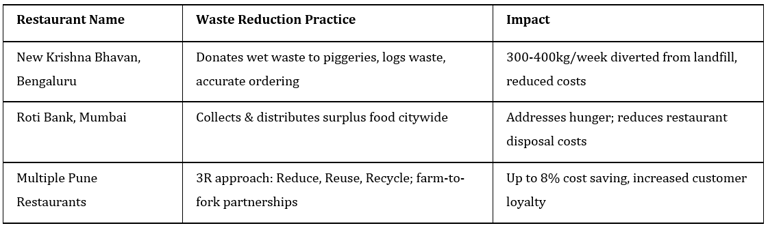
Example: Restaurants using waste tracking systems have reported up to 8% cost savings by identifying and addressing high-waste meals and ingredients.
2. Inventory Management and Storage Best Practices
· Implement the FIFO (“First In, First Out”) system to ensure older stock is used before new stock.
· Invest in inventory management software that integrates with your purchasing and sales system for real-time oversight.
3. Menu Engineering and Portion Control
· Smaller, Flexible Menus: Focus on core dishes using overlapping ingredients to minimize perishables and adapt to seasonality.
· Portion Size Calibration: Adjust serving sizes based on consumption patterns; introduce variable portion sizes to reduce plate waste.
· Daily Specials: Create specials utilizing surplus or nearing-expiry ingredients, turning potential waste into profit.
4. Staff Training and Engagement
· Train staff on waste reduction, proper storage, and “root-to-stem” cooking techniques to maximize ingredient use.
· Culture of Sustainability: Regularly recognize and incentivise staff for waste-reducing ideas and meeting reduction benchmarks.
5. Customer Engagement
· Educate diners about your sustainability initiatives—through menu inserts, table tents, or digital campaigns—to encourage the acceptance of smaller portions or “no plate waste” pledges.
· Offer customers the option to customise portion sizes.
6. Repurposing and Donation of Surplus Food
· Repurpose trimmings and by-products: Turn citrus peels into garnishes, prepare stocks from vegetable scraps.
· Partner with food banks to redistribute surplus—addressing hunger and reducing disposal costs despite logistical and regulatory hurdles.
Case Study: Roti Bank, Mumbai
The Dabbawala Association, in partnership with Roti Bank, collects surplus food from restaurants and delivers it to those in need. Logs, preservation methods, and coordinated logistics ensure food remains safe. This resolves social challenges and reduces restaurant waste management costs, demonstrating a scalable, replicable model for other Indian cities.
7. Composting and Recycling
· Compost organic waste to create nutrient-rich soil for local farms or your own herb gardens, closing the food loop.
· Use and promote recyclable, reusable, or compostable packaging.
Example: “Bring Your Own Bowl” initiatives let customers use their own containers, reducing plastic waste while building community goodwill.
8. Technology and Innovation
· Apps and IoT solutions (like waste-monitoring smart bins) can automate measurement and alert staff to high-waste instances in real time.
· Digitised donation coordination platforms connect surplus food to NGOs, reducing waste and compliance risks.
9. Policy Alignment and Collaboration
· Stay updated on government policies like plastic bans and municipal waste disposal rules.
· Collaborate with local NGOs, government skilling initiatives, and industry associations to develop best practices and jointly run pilot programs.
Profitable Outcomes: Impact on the Bottom Line
· Restaurants adopting waste audits, inventory systems, and menu engineering have consistently saved 5-8% on raw materials—equal to tens of thousands of rupees per year for a mid-sized operation.
· Compliance with sustainability trends increases customer loyalty, opens opportunities for subsidies or tax rebates, and attracts a niche base of eco-conscious customers.
· Waste donation and composting partnerships cut disposal costs and generate PR value, reinforcing a brand’s ethical image and social responsibility.
Real-World Indian Case Studies
Implementation Guide: Practical Steps for Indian Restaurateurs
Start with a Waste Audit: Use a simple logbook or a kitchen scale to track food thrown out daily for two weeks.
Analyse the Data: What is being wasted, why, and at which stage? Preparation, overproduction, spoilage, or plate returns?
Set SMART Goals: Target 5% monthly reduction in kitchen waste; align targets with raw material savings.
Train the Team: Hold a workshop to introduce waste reduction methods and specific expectations.
Engage Customers: Communicate sustainability efforts; introduce flexible portion sizing.
Connect with Local Partners: NGOs for food donation, farmers or composters for organic waste, authorities for recycling.
Monitor, Adapt, Celebrate: Review progress monthly, tweak strategies, and publicly reward staff for milestone achievements.
Conclusion :
· Waste reduction is both profitable and sustainable. By implementing data-driven forecasting, menu engineering, staff training, strategic donation, and composting—all tested in the Indian market—restaurants can transform kitchen waste from a cost burden into a source of savings, innovation, and community goodwill.
· Small steps, big impact: Even modest actions—like tracking food waste for a week—can catalyse broader change and measurable improvement in both profits and sustainability.
Sources
Findings and statistics are drawn from sector studies, case analyses in Bangalore and Mumbai, industry survey reports, and best practice documentation.
This guide draws on the latest research, case studies, and industry expertise to provide a clear roadmap for Indian restaurateurs seeking to turn sustainable waste management into a competitive advantage and a driver for profitability.
Innovative food waste management practices for restaurants
R3 Practices by the Restaurants and Hotel Industry for Sustainable Waste Management in Pune
Embracing circularity, a sustainable path for the Indian restaurant industry
Food Waste in the Restaurant Industry in India
How to Reduce Food Waste – Prevention Tips & Tricks